Hands on the Wheel, Ears on the Radio: Why Streaming Can't Crack the Commute
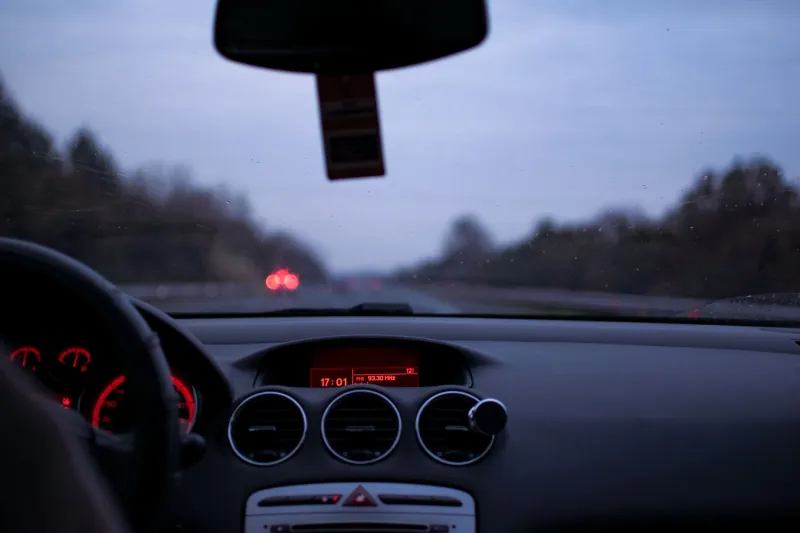
Let's set the scene. It's 7:48 a.m. You've got a full Spotify library, a meticulously built "Morning Drive" playlist, and a premium subscription that costs you $11 a month. You start the car. And then — almost without thinking — you hit the radio button.
You're not alone. Not even close.
According to Nielsen data, radio still reaches more than 90% of American adults every single week, and the commute window remains its most dominant territory. Morning and evening drive times — that 6-to-10 a.m. and 3-to-7 p.m. stretch — are the crown jewels of broadcast programming, and they've been that way for decades. Streaming has disrupted basically every other corner of the audio world. But rush hour? Radio still owns it.
The question worth asking is why.
The Paradox of Too Much Choice
Here's something counterintuitive: having unlimited options can actually make listening harder, not easier. Psychologists call it decision fatigue, and it hits differently when you're already juggling a coffee cup, a GPS rerouting you around an accident on the 405, and the low-grade anxiety that comes with being three minutes behind schedule.
Choosing a playlist — even a pre-built one — requires a micro-decision. What mood am I in? Do I want something energizing or something calm? Is this a podcast morning or a music morning? Those tiny mental negotiations add up. Radio eliminates all of it. You tune in, and someone else has already made the call. The song is playing. The conversation is mid-flow. You just... join.
There's real cognitive relief in that. During the commute, your brain is already running a background process of navigation, timing, and mild stress management. Radio meets you where you are rather than asking you to do more work.
Structure Feels Good When the Day Doesn't Yet
Morning radio programming is built around a rhythm — and that rhythm mirrors the rhythm of the commute itself. Traffic updates, weather, a few songs, a quick bit from the hosts, news headlines, repeat. It's predictable in the best way. That structure acts almost like scaffolding for the start of your day, giving shape to a window of time that otherwise feels formless.
Streaming platforms have tried to replicate this with curated morning playlists and algorithmically timed releases, but they're missing a key ingredient: live human presence. There's a huge difference between a playlist that knows you like indie rock and a morning show host who just reacted to the same traffic jam you're sitting in right now. One is a mirror. The other is a companion.
And companionship, it turns out, is something commuters are quietly desperate for.
Shared Time in a Fragmented World
Here's something streaming will probably never be able to replicate: synchronized listening. When a morning show in Chicago does a bit about the Bears' dismal performance last night, every single person tuned to that station is hearing it at the exact same moment. There's a strange, low-key community in that — a kind of invisible congregation of strangers sharing the same audio experience from the inside of a few thousand different cars.
In a media landscape that's been almost completely atomized — where your algorithm serves you content nobody else in your neighborhood is seeing — radio is one of the last places where a genuinely shared, real-time experience still happens at scale. You might not know the person in the lane next to you, but there's a decent chance you're both listening to the same station right now.
That's not a small thing. Americans are lonelier than ever, commutes are longer than ever, and the sense of being part of something bigger — even something as modest as a local morning show — has real psychological weight.
The Discovery That Streaming Can't Fake
Algorithms are good at giving you more of what you already like. Radio is good at giving you something you didn't know you needed.
There's a specific kind of joy that comes from a song coming on the radio that you haven't heard in years — something you didn't search for, didn't ask for, couldn't have predicted. The algorithm might eventually surface it, but only after it's learned enough about you to predict the preference. Radio just plays it. Right now. On a Tuesday morning when you're stuck on I-95.
That element of surprise is actually a feature, not a bug. Neuroscience research on dopamine and music suggests that unexpected musical discoveries hit differently than anticipated ones. When you already know what's coming next on a playlist, the reward response is muted. When a song catches you off guard — especially one tied to a memory — the emotional hit is significantly stronger.
Radio is essentially a discovery engine that's been running for a hundred years, and it's still pretty good at its job.
Why the Algorithm Keeps Losing This One
Streaming services know this is a problem. Spotify has "DJ," its AI-powered feature that mimics the feel of a radio host introducing tracks. Pandora has been doing algorithmic radio for two decades. Apple Music has leaned into human-curated stations. These are all smart moves, and they've picked up listeners.
But there's a ceiling. An AI host doesn't get stuck in the same traffic you're in. It doesn't reference the local sports team's heartbreaking loss from last night with genuine frustration in its voice. It doesn't take a caller who just said something completely unhinged at 8:15 in the morning and make you laugh so hard you almost miss your exit.
Live radio is messy in a way that feels human. And during the commute — when you're already a little stressed, a little tired, and not quite ready to face whatever the day is about to throw at you — human feels like exactly the right frequency.
The Commute Is Radio's Home Court
Every other part of the day, streaming has a strong case. At the gym, a personalized playlist makes sense. At your desk, a podcast you chose feels right. On a long flight, you want control. But the commute is different. It's a transitional space — neither home nor work, neither fully awake nor fully on — and radio was built for exactly that kind of in-between.
So next time you reach for that preset button before your playlist even loads, don't overthink it. Your brain already knows what it needs. Apparently, it needs the radio.