Tune In, Set Up, Drop the Needle: Your 2024 Guide to Building a Killer Home Radio Rig
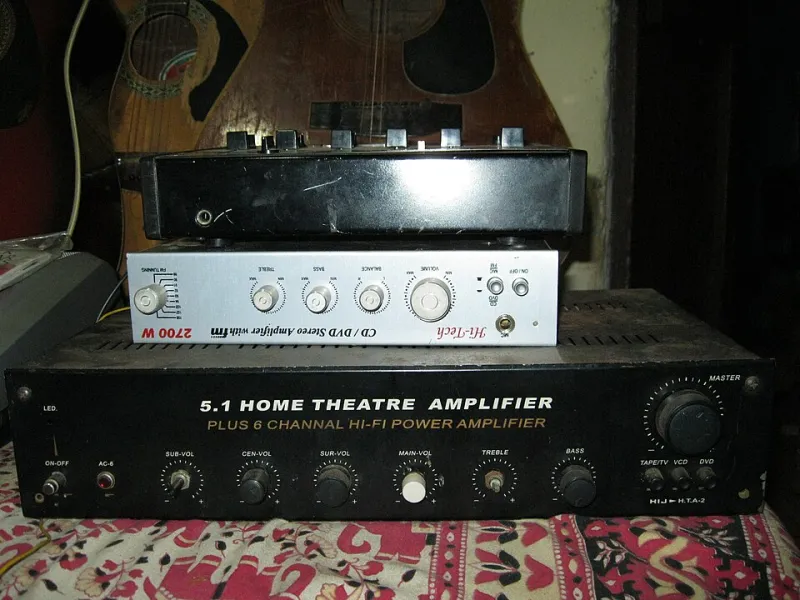
Photo: julian correa from belgaum cantonement, india, CC BY 2.0, via Wikimedia Commons
Not that long ago, the idea of "investing in a home radio setup" would've gotten you some strange looks. Why bother when everything's on your phone? But something has shifted. Audio enthusiasts, remote workers, and just plain music lovers are rediscovering the deep pleasure of a well-tuned home radio system — one that pulls in FM from across town, streams internet radio from Tokyo, and catches AM talk from the other side of the country.
This isn't your grandparents' transistor radio. This is intentional listening, built into your home like a proper audio component. Here's how to do it right in 2024.
First, Know What You're Actually Building
Before you start buying gear, figure out what you want your setup to actually do. There are three broad camps:
The Purist wants exceptional AM/FM reception, minimal fuss, and beautiful sound. They're probably already into hi-fi audio.
The Aggregator wants one system that handles broadcast FM, internet radio, podcasts, and maybe even streaming services — all through a single interface.
The Tinkerer wants to go deep on software-defined radio (SDR), explore shortwave, scan weather bands, and generally geek out on radio as a technology.
Most people land somewhere between these. The good news is that 2024's equipment market has solid options at every level, and building a multi-source rig is more achievable than ever.
Vintage vs. New: The Great Restoration Debate
Let's get this out of the way: restored vintage tuners can genuinely outperform modern budget equipment on FM reception. Units like the Sansui TU-717, Kenwood KT-7500, or the legendary Magnum Dynalab FT-101 (if you can find one) were built in an era when FM tuner performance was a serious engineering competition. The components were high-quality, the circuits were analog and warm, and manufacturers actually cared about selectivity and sensitivity specs.
A properly recapped and aligned vintage tuner from the late '70s or '80s can still be a joy to use. eBay and local audio shops are your hunting grounds. Budget $80–$300 for something decent, and factor in another $50–$150 for professional alignment if it hasn't been serviced recently.
The catch: vintage gear typically only does FM (and sometimes AM). No internet radio. No Bluetooth. No app control. If you're a purist, that's fine. If you want more flexibility, you'll either need to pair it with additional components or go a different route.
Modern Tuners and Smart Radios: What's Worth Buying
Budget Tier ($30–$80): The Casual Listener Starting Point
Sangean WR-11 — This tabletop FM/AM radio is clean, reliable, and sounds genuinely good for its price. It's not going to impress audiophiles, but for a kitchen counter or home office, it's a solid buy. Built-in speaker, analog tuning, no fuss.
DIGITECH AR-1780 — A step up with better sensitivity and a cleaner FM section. Great for apartments in cities where signal strength isn't the issue.
Mid-Range ($100–$300): Where Things Get Interesting
Sangean WFR-28 — This is where internet radio enters the picture. The WFR-28 pulls in FM broadcast and connects to thousands of internet radio stations via Wi-Fi. The interface is a bit clunky, but the audio quality is solid and the reception is strong. At around $130, it's one of the best value plays in the category.
Ruark R3 — British-designed but widely available in the US, the R3 is a genuinely beautiful piece of equipment. It handles FM, DAB (less relevant stateside, but there), Bluetooth, and internet radio through a satisfying rotary control interface. Sound quality is warm and rich. Around $250–$280 depending on where you shop.
Cambridge Audio AXR100 — If you already have speakers and want a proper stereo receiver with an excellent FM tuner built in, this is your move. It's a 100-watt integrated amp with a tuner section that would embarrass a lot of dedicated units. Around $600, but it replaces multiple components.
High-End ($400 and Up): The Serious Setup
Magnum Dynalab MD-90T — If FM audio quality is your primary goal and budget isn't a major constraint, Magnum Dynalab is the name in audiophile tuners. The MD-90T is a reference-class FM tuner that pulls in distant stations with startling clarity. It's a specialized piece of gear for a specific kind of listener, but it's genuinely exceptional.
Naim Mu-so 2nd Generation — For the aggregator who wants everything in one premium package, the Mu-so handles internet radio, Spotify, Apple AirPlay, Tidal, and FM broadcast with audiophile-grade sound. At around $1,500, it's a splurge — but it's also the last home radio device you'll ever need to buy.
Going Deep: Software-Defined Radio (SDR)
For the tinkerers, SDR is a genuine rabbit hole worth falling into. A software-defined radio replaces traditional hardware components with software, meaning a single inexpensive USB dongle connected to your laptop can tune AM, FM, shortwave, weather satellite signals, aircraft transponders, and more.
RTL-SDR Blog V4 Dongle — At around $30, this is the entry point. Pair it with the free SDR# software (Windows) or GQRX (Mac/Linux) and you have a radio that covers frequencies from roughly 500 kHz to 1.75 GHz. It's not a plug-and-play experience — expect a learning curve — but the ceiling is essentially unlimited.
Airspy HF+ Discovery — Stepping up to around $170, this unit offers significantly better sensitivity and dynamic range, particularly for AM and shortwave. Serious hobbyists swear by it.
SDR setups pair well with a good outdoor antenna. A simple wire dipole cut to FM frequencies or a dedicated shortwave longwire antenna will dramatically improve what you can pull in.
Pulling It All Together: The Multi-Source Setup
Here's a practical, mid-range setup that covers all your bases:
- A quality integrated amp or receiver (Cambridge AXR100 or similar) as your hub
- A dedicated FM tuner (vintage Sansui or Sangean component) connected via RCA
- A smart radio streamer (Sangean WFR-28 or similar) for internet radio, connected to an aux input
- A decent outdoor FM antenna — even a simple dipole in your attic will transform reception
- A pair of bookshelf speakers you love
This setup gives you broadcast FM at its best, access to thousands of internet radio stations, and a clean path for podcasts and streaming through your phone via Bluetooth or aux. Total cost: roughly $600–$900 depending on your choices.
The Antenna: Don't Skip This
Seriously. Whatever you buy, a good antenna matters more than most people realize. A $15 Terk FM antenna or a homemade dipole properly positioned near a window will dramatically outperform the little wire antenna bundled with your tuner. If you're serious, an outdoor Winegard antenna mounted in your attic is the move.
Final Thought from 102 Radio
At 102 Radio, we believe great audio isn't about having the most expensive gear — it's about building a setup that connects you to the sounds that matter. Whether that's your local FM station, a jazz stream from New Orleans, or a shortwave broadcast from across the Atlantic, the right home radio rig turns listening from a passive habit into something you actually look forward to.
Your signal is out there. You just need the right equipment to find it.