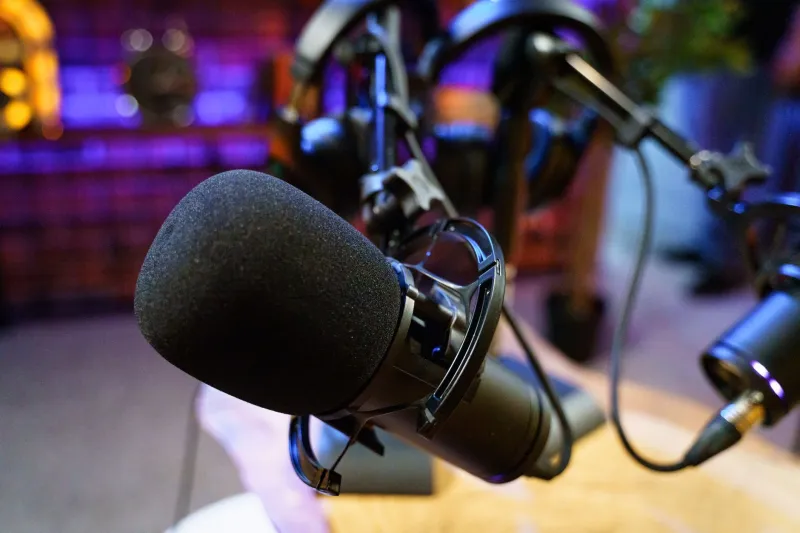
Empty Mics and Full Airwaves: Radio's Quiet Struggle to Find Its Next Great Voice

There's a moment every radio listener knows — when a host's voice just fits. When the banter feels unscripted, the segues land naturally, and you forget for a second that someone is literally sitting in a room talking into a microphone for a living. That magic doesn't happen by accident. It takes years of grinding through overnight shifts, small-market stations, and enough bad breaks to fill a blooper reel the size of a hard drive.
The problem? Fewer and fewer people are willing to put in that grind anymore. And the stations that depend on that pipeline are starting to feel the pressure in ways that listeners are only beginning to notice.
The Pipeline Isn't Just Thin — It's Cracking
For most of the twentieth century, radio had a clear path. You started at a tiny station in a place like Provo or Shreveport, worked the shifts nobody wanted, built your chops, and eventually climbed toward bigger markets. It wasn't glamorous, but it was a ladder. Today, that ladder has missing rungs.
Broadcasting school enrollment has dropped significantly over the past decade. Many vocational programs that once fed local stations with fresh talent have been cut or consolidated. According to industry observers, the number of dedicated broadcast journalism and radio performance programs at US colleges has shrunk considerably since the mid-2010s, as universities shifted resources toward digital media and content creation tracks.
The result is a shrinking pool of people who even know how to run a board, manage dead air, or handle a live caller without it going sideways. The institutional knowledge that used to pass from veteran to rookie in cramped production rooms is harder to transfer when there aren't enough rookies showing up.
The Budget Math Doesn't Help
Here's the uncomfortable truth that station managers will tell you off the record: the economics of radio have made it genuinely difficult to offer competitive salaries for entry-level and mid-tier on-air positions. When streaming platforms, podcast networks, and even YouTube channels are dangling better pay and more creative freedom at younger audio talent, a 6 AM slot at a regional FM station starts to look a lot less appealing.
Consolidation in the radio industry — which accelerated through the late 1990s and has continued in waves ever since — means that many stations are now operated by large ownership groups running lean staffs across multiple frequencies. Syndicated programming fills hours that once belonged to local voices. It's efficient. It's also slowly eroding the very thing that made local radio irreplaceable.
When a station can run a syndicated morning show for a fraction of what it costs to hire and develop a homegrown talent, the short-term math is obvious. The long-term math, though, is where things get complicated.
What It Sounds Like From the Listener's Side
Most listeners don't know the name of the program director at their favorite station. They don't know whether the host they love is staff or syndicated, local or national. What they do notice — even if they can't articulate it — is when something feels off. When the references are slightly generic. When the humor doesn't quite land for their city. When the caller interactions feel a little too managed.
That subtle disconnect is the sound of a talent shortage. It's the audio equivalent of a restaurant switching from a local chef to a national chain's standardized menu. The food is still food. But something's missing.
Stations that have leaned too hard on automation and syndication are starting to hear about it — in listener surveys, in social media comments, and in the slow bleed of loyal audiences toward platforms that feel more personal. Ironically, the very thing radio does better than any algorithm — genuine human connection — is being undermined by the struggle to find and keep the humans who create it.
The Unexpected Upside: New Voices Are Filling the Void
Here's where the story gets genuinely interesting. The same conditions that are squeezing traditional radio talent pipelines are cracking open doors that didn't exist before.
Stations that used to require years of market experience before handing someone a regular slot are now taking chances on people who came up through podcasting, internet radio, or even social media audio platforms. The skill sets don't map perfectly — broadcasting live is a different animal than recording a podcast you can edit — but the raw communication ability, the audience instincts, and the willingness to perform are often very much there.
Some community and college radio stations, which were never part of the traditional big-market pipeline anyway, are finding themselves newly relevant as training grounds. Low-power FM stations and internet radio outlets like the kind you'd find all over the 102radio.net universe are functioning as the small-market proving grounds that regional FM once provided. The format is different. The stakes feel lower. But the reps are real.
There's also a genuine diversity dividend happening in some markets. Because the old gatekeeping structures have loosened — partly by necessity, partly by cultural shift — voices that might have struggled to break through a decade ago are getting airtime. That's not a silver lining worth papering over the larger problem, but it's a real and meaningful development.
What Stations Are Actually Doing About It
The responses vary wildly depending on market size and ownership structure. Some large-market stations have launched formal mentorship pipelines, partnering with local colleges to offer real on-air experience as part of internship programs. A handful of ownership groups have quietly started internal talent development programs that function almost like minor league systems — identifying promising voices early and moving them through a structured progression.
Other stations are rethinking what "on-air talent" even means. Hybrid roles that combine on-air performance with social media management, podcast hosting, and digital content creation are becoming more common. The idea is to make the position compelling enough — and varied enough — to attract people who might otherwise head straight to a streaming-first career.
There's also a growing conversation about compensation. It's not happening loudly or publicly, but the stations that are successfully holding onto good talent are generally the ones willing to pay for it. Radical concept, maybe. But the data is pretty clear.
The Frequency That Needs Filling
Radio has survived every wave of disruption that was supposed to kill it — television, the walkman, the iPod, streaming, and the endless podcast boom. It has survived because of the people behind the microphones, not despite them. The voices that make you feel like someone actually gets your morning, your commute, your city.
That's not something a playlist can replicate. It's not something an AI-generated host — however convincing — has quite nailed yet. It's a human thing. And right now, the industry that needs those humans most is working hard to figure out how to find them, keep them, and give them a reason to stay.
The mic is open. The question is who's going to step up and grab it.