Parked and Live: The Drivers Turning Their Cars Into Full-On Broadcast Booths
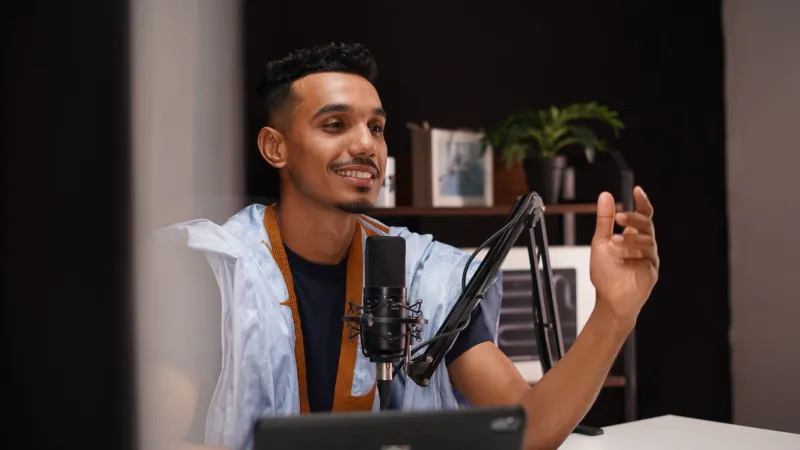
There's a guy in a Chevy Silverado parked outside a Waffle House in Knoxville, Tennessee, and he's got 4,000 people listening to him right now. He's not a celebrity. He doesn't have a contract with a major network. He's got a USB condenser mic clipped to his sun visor, a phone mounted on his dash, and something to say about last night's game. That's it. That's the whole studio.
Welcome to one of the quietest revolutions in audio — the rise of the car-based broadcaster.
The Front Seat as a Creative Space
It sounds a little strange until you think about it for more than thirty seconds. The car has always been where Americans do their most honest listening. We've been confessing things to our dashboards for decades — singing off-key, talking back to talk radio hosts, processing the workday on the way home. The car is private enough to feel safe and just public enough to feel alive.
So it makes a strange kind of sense that people are now flipping the dynamic. Instead of just receiving audio in their vehicles, they're broadcasting from them.
Platforms like Twitch, YouTube Live, TikTok Live, and even Spotify's live audio tools have made it genuinely easy to go live from virtually anywhere with a cell signal. Pair that with the acoustic properties of a car interior — which, it turns out, is a surprisingly decent recording environment thanks to all that upholstered padding — and you've got a setup that costs a few hundred bucks and punches way above its weight.
What the Setup Actually Looks Like
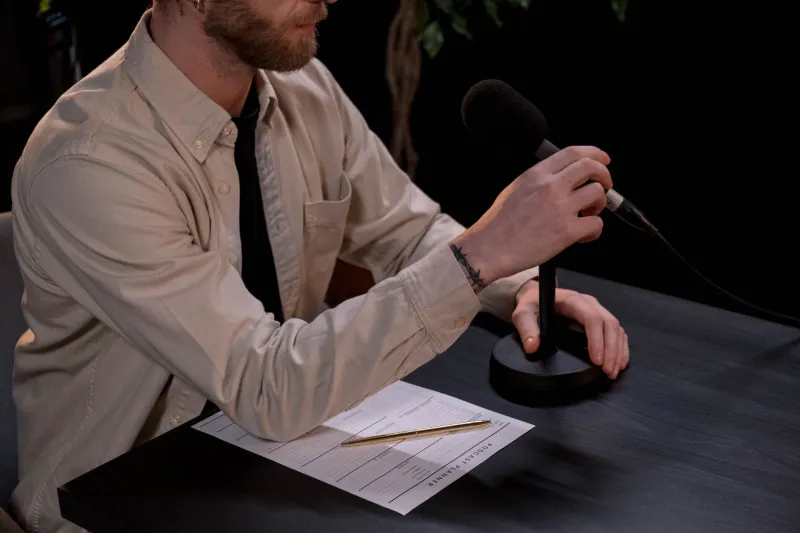
The gear conversation is where things get interesting, because the range is wild. On one end, you've got creators running a full rig: an audio interface tucked into the glovebox, a broadcast-quality dynamic mic on a flexible arm mount, a laptop balanced on a passenger seat tray, and a 5G hotspot for reliable connectivity. These folks have clearly done their homework, and their streams sound like they're coming out of a real studio.
On the other end, you've got someone with a $40 Fifine USB mic, their phone's hotspot, and a free streaming account — and sometimes those are the ones with the most loyal audiences.
The common thread isn't budget. It's intentionality. The car-based broadcasters who build real followings treat their vehicle like a professional space. They soundcheck before going live. They park somewhere with stable signal. They think about lighting for video-paired streams. They position the mic away from the HVAC vent. These are the same considerations a radio engineer would walk through before a remote broadcast — just applied to a 2019 Honda Accord.
Why the Car? Why Now?
Ask the creators themselves and you'll hear a few recurring answers.
First, there's the privacy angle. Home studios are great if you live alone. If you've got kids, roommates, a partner working from home, or a dog that loses its mind every time the doorbell rings, the car is genuinely the most controlled environment you have access to. You close the door and the world outside drops away.
Second — and this one's a little more philosophical — there's something about being in a car that loosens people up. It's the same reason therapy sessions conducted during walks or drives tend to feel less guarded than ones held across a desk. Motion, or even the suggestion of motion, lowers the walls a little. Car broadcasters consistently say their best streams happen when they're in the vehicle, not when they move to a "real" setup.
Third, and maybe most importantly, the car represents a kind of freedom that maps directly onto what old-school radio always promised. You're untethered. You're mobile. You could be anywhere. That energy translates.
The Audiences They're Building
Here's what's genuinely surprising: these aren't niche micro-audiences humoring a friend. Some car-based audio streamers are pulling consistent live listener counts in the thousands, with replay numbers that suggest a real, engaged community has formed around their programming.
The content varies enormously. Sports commentary is huge — especially the post-game breakdown format, where a creator goes live immediately after a big game while the emotion is still raw and the takes are still hot. That real-time energy is something no podcast recorded two days later can replicate. It's the same reason drive-time sports radio has always printed money.
Beyond sports, you've got music discovery streams where creators play tracks and talk through them like a DJ with nowhere to be. You've got news commentary, true crime deep-dives, relationship advice, local community talk — the full radio programming wheel, just distributed through a phone and aimed at a self-selected audience rather than a broadcast radius.
The parasocial connection these creators build is real and it's fast. There's an intimacy to hearing someone's voice in an enclosed space, with the occasional ambient sounds of the outside world bleeding through, that no polished studio production can manufacture. It sounds like radio used to sound — a little rough around the edges, completely in the moment.
The Callback to Classic Radio
If you've spent any time around radio history, this whole movement feels familiar in the best way. The earliest AM radio broadcasters weren't working out of gleaming facilities. They were improvising. They were figuring it out in real time, building audiences through personality and consistency rather than production value.
The car broadcasters of 2024 are doing the same thing, just with a global distribution network instead of a regional transmitter. The spirit is identical: I have something to say, I have a microphone, and I'm going live right now.
What's changed is the barrier to entry, which has essentially collapsed. You don't need a license, a tower, or a station affiliation. You need a signal and a voice.
What It Says About Us
The car broadcast movement isn't just a tech story or a gear story. It's a story about a deep, persistent human need to be heard — and to connect with other people in real time, without the filter of heavy production or algorithmic curation.
Streaming platforms have given us more content than any human could consume in a hundred lifetimes. But a lot of that content feels pre-packaged, optimized, and slightly distant. When someone goes live from a parking lot and starts talking, it feels like the opposite of all that. It feels present.
That's what radio always did at its best. It put a human being in your ear and said: this is happening right now, and you're part of it.
Turns out you don't need a tower to do that. You just need a car, a mic, and something worth saying.