3 AM and Someone's Still Talking: Why Night Shift Workers Can't Work Without the Radio
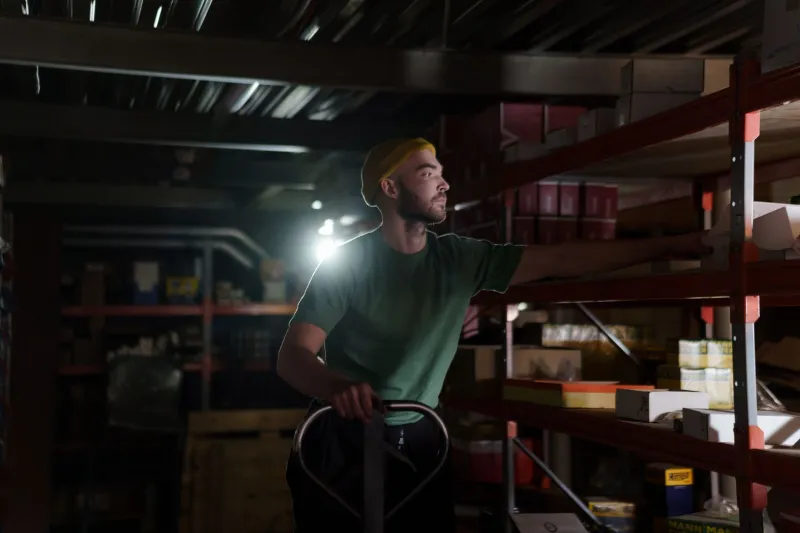
There's a specific kind of quiet that sets in around 2:30 in the morning. Not peaceful quiet — the other kind. The kind that presses in on you when you're the only one awake in a hospital corridor, or behind the wheel on a stretch of I-80 with nothing but headlights and darkness for company, or watching a security monitor in an empty office building while the rest of your city sleeps.
For millions of Americans working overnight shifts, that silence isn't just inconvenient. It can be genuinely hard on the mind. And for a lot of them, the thing standing between manageable and miserable is a voice on the radio.
Not a podcast. Not a curated playlist. A live voice — somebody real, somewhere, talking into the night.
The Invisible Workforce That Runs on Radio
The United States has somewhere north of 15 million people working overnight or rotating shifts. Nurses and ER techs. Long-haul truckers. Factory floor workers. Hotel staff. Warehouse employees. Security personnel. These are the people who keep the country functioning while everyone else is unconscious, and they do it with very little acknowledgment from the rest of society.
What they also do — quietly, habitually, almost universally — is turn on the radio.
Talk to enough night shift workers and a pattern emerges fast. It's not background noise they're after. It's presence. There's a meaningful difference between music playing in an empty room and a person talking to you, even if that person has no idea you exist. A DJ cracking a joke at 3 AM, a talk radio host getting fired up about something, even a caller sharing a story — these moments create a sense of shared space that streaming algorithms simply cannot manufacture.
What a Voice Actually Does to Your Brain at Night
Here's the thing about the human voice: your brain is wired to respond to it differently than it responds to music or ambient sound. Hearing speech — real, unscripted, emotionally present speech — activates social processing centers in the brain. It signals, on some primal level, that you're not alone.
For night shift workers dealing with disrupted circadian rhythms, elevated cortisol, and the slow grind of social isolation, that signal matters more than most people realize. Sleep deprivation alone increases emotional vulnerability. Pair that with genuine physical isolation — a long stretch of highway, an empty factory floor — and the psychological stakes get real.
Radio, particularly live talk radio and late-night DJ programming, introduces what some researchers describe as parasocial connection: a one-sided but emotionally meaningful relationship with a media personality. You know their laugh. You know how they handle a bad caller. You know they'll be there when you tune in. That consistency is not a small thing when everything else about your schedule feels upside down.
"It Feels Like Someone Left the Light On"
Ask a night shift nurse what she listens to at 3 AM and there's a decent chance she doesn't say Spotify. There's a particular comfort in knowing that the voice you're hearing is live — that somewhere, right now, another human being is awake and broadcasting into the same night you're living through.
Truck drivers have talked about this for decades. The CB radio culture that defined long-haul trucking wasn't just practical communication — it was community. When CB faded, AM talk radio filled the gap. And while satellite radio and podcasts have added options, plenty of drivers still reach for local FM or AM stations precisely because they want something happening in real time. A traffic update. A weather check. A host reacting to breaking news. Proof that the world is still turning.
Security guards working solo overnight shifts in office buildings describe a similar dynamic. The radio isn't just entertainment — it's a psychological anchor. Something to orient around. Something that marks time without a clock.
Why Streaming Doesn't Quite Fill the Gap
This isn't a knock on streaming platforms. The music is great. The podcasts are excellent. But there's a structural difference between recorded content and live broadcasting that matters specifically in the context of overnight isolation.
Recorded content, by definition, was made before you needed it. It doesn't know what's happening right now. It doesn't react. A podcast host recorded their show last Tuesday; they have no idea it's currently 3:47 AM and you just had a rough hour.
A live DJ does. Or at least, they're operating in the same present tense you are. When a late-night host says "it's almost four in the morning and if you're still up, I see you" — that lands differently than anything pre-recorded can manage. It's not parasocial connection in the abstract. It's someone acknowledging your specific, current moment.
For workers whose schedules already put them out of sync with the social world, that acknowledgment carries real weight.
The Stations That Know Their Night Crowd
Some radio stations have quietly built loyal overnight audiences by simply paying attention to who's listening. Late-night programming that speaks directly to shift workers — shout-outs to nurses ending their rounds, weather updates relevant to truckers, lighter segments designed for the 4 AM energy slump — creates a feedback loop of loyalty that no algorithm can replicate.
This is radio doing what it has always done best: being local, being present, and being human. The frequency doesn't change because it's inconvenient. The host shows up because someone out there needs them to show up.
There's a reason night shift workers pass radio stations along like recommendations the way other people share restaurant tips. "You have to check out this station — the overnight guy is hilarious." "They do this thing at 3 AM where they take requests and it's actually great." These aren't just listener reviews. They're survival tips.
Something Worth Tuning Into
The mental health conversation in America has gotten more honest in recent years, which is genuinely good. But it tends to focus on apps, therapy access, and workplace wellness programs that operate during business hours — which is to say, it often misses the 15 million people whose workday starts when everyone else's ends.
Radio isn't a substitute for mental health care. Nobody's claiming it is. But as a tool for managing isolation, maintaining emotional equilibrium, and simply feeling less alone during the hardest hours of the night — it holds up remarkably well.
There's a frequency out there right now, broadcasting into the dark. And somewhere on a long stretch of highway, or in a quiet hospital corridor, or at a factory workstation under fluorescent lights, somebody is listening and feeling, just slightly, less alone because of it.
That's not nothing. That's actually kind of everything.