Surrender the Queue: Why Gen Z Is Falling Hard for Radio-Style Listening

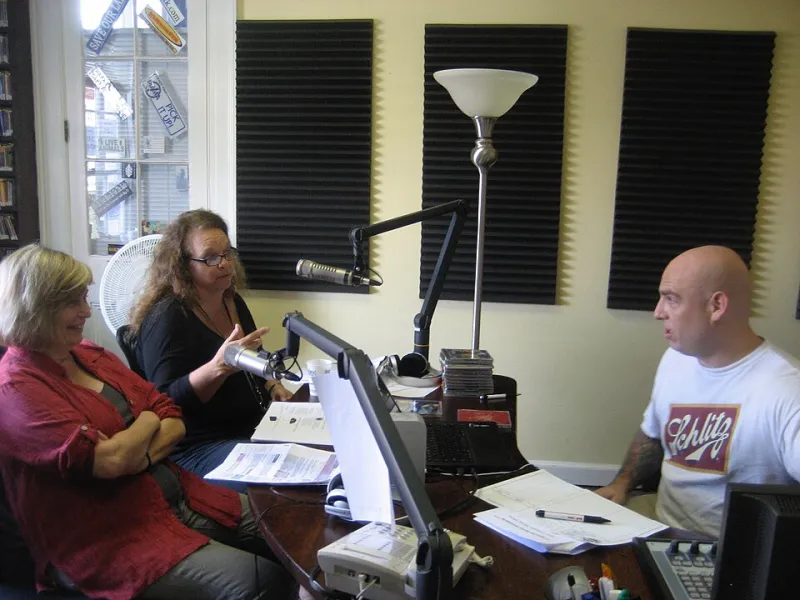
Photo: Shixart1985, CC BY 2.0, via Wikimedia Commons
There's a weird thing happening in audio right now, and it doesn't quite fit the narrative we've been told about the youngest generation of listeners. Gen Z — the cohort raised on algorithmic feeds, infinite scroll, and on-demand everything — is quietly, almost sheepishly, falling in love with a format they were never supposed to care about. They're tuning into curated, linear audio streams. They're letting something else decide what comes next. They're, in a word, listening to radio. Sort of.
Not your dad's AM drive-time radio, exactly. But something that borrows its bones from the same place: a continuous flow of music, a voice that ties it together, a sense that you're sharing a moment with whoever else happens to be tuned in. Call it neo-radio, lo-fi streams, or just vibes-based listening — whatever the label, the behavior is spreading fast, and the reasons behind it are more interesting than anyone expected.
The Paradox of Infinite Choice
Here's the thing about having 100 million songs at your fingertips: at some point, it stops feeling like freedom and starts feeling like homework.
Streaming platforms have given us unprecedented access to music, and that's genuinely incredible. But the flip side of unlimited choice is something psychologists call decision fatigue — that low-grade mental exhaustion that sets in when you've been making too many micro-decisions. What playlist? What mood? What genre? Skip or stay? The cognitive overhead adds up, and for a generation already navigating social media anxiety, career uncertainty, and a news cycle that never sleeps, the last thing some people want is another thing to manage.
"There's real research behind the idea that relinquishing control can be deeply restorative," says Dr. Priya Menon, a cognitive neuroscientist who studies audio perception and attention. "When you hand off the decision-making to a trusted source — a DJ, a curated stream, a radio format — your brain gets to shift into a more receptive, relaxed state. You're not evaluating. You're just receiving."
That receptive state? Gen Z is chasing it hard.
The Discovery Factor Nobody's Talking About
Ask a 22-year-old why they've been spending time on a lo-fi hip-hop stream or a curated indie radio app instead of their Spotify Discover Weekly, and you'll hear a version of the same thing over and over: I found stuff I never would've looked for.
That's the discovery paradox at the heart of this shift. Algorithmic playlists are incredibly good at serving you more of what you already like. Radio — even its digital cousins — is better at introducing you to what you didn't know you needed.
Jamila Torres, 24, from Austin, Texas, started listening to an internet radio station during her WFH hours last year. "I'd been listening to the same Spotify playlists for months and I was so bored," she says. "Then I found this station that plays indie soul and jazz fusion and random stuff I'd never search for. Now I listen to it every morning. It's like having a friend with really good taste just playing stuff in the background."
That social proxy feeling — the sense of a human presence on the other end of the audio — is something algorithmic playlists genuinely struggle to replicate. A well-programmed stream, even without a live host, carries the implicit fingerprint of whoever built it. It feels intentional. Curated. Personal in a way that a generated queue often doesn't.
Apps That Get It
The market has started to notice. A wave of platforms and features built specifically around radio-style listening have emerged in the last few years, and they're gaining real traction with younger audiences.
Some lean into the nostalgia angle directly — think interfaces that mimic an old FM tuner dial or use static and crackle as aesthetic texture. Others are more straightforward about being modern products with a linear philosophy: you tune in, something plays, you don't skip, you don't shuffle. You just listen.
Developers building in this space talk about intentionality a lot. "We made a deliberate choice early on not to include a skip button," says Marcus Freed, co-founder of a radio-inspired streaming app currently in beta. "That sounds like a limitation, but our users tell us it's one of their favorite things about the experience. It forces a kind of patience that streaming has kind of trained out of us."
Patience. From a generation supposedly raised on six-second attention spans. The irony isn't lost on anyone.
Passive Listening as Self-Care
There's another layer here that's worth sitting with. For a lot of Gen Z listeners, choosing a radio-style stream isn't just about music discovery or beating decision fatigue. It's about creating a specific kind of ambient experience — background audio that holds space without demanding attention.
Study streams on YouTube with millions of subscribers. Lo-fi playlists framed as "music to relax/study to." Audio "rooms" on apps that simulate the sound of a coffee shop or a rainy library. These aren't passive products — they're actively engineered environments. And they share a core quality with traditional radio: they're designed to accompany life, not interrupt it.
"I think there's a comfort in knowing something is just on," says Devon Malik, 21, a college junior in Chicago. "Like, I don't have to tend to it. I'm not going to miss something if I look away. It's just there, doing its thing, and I'm doing mine."
That description — something just being on — is about as pure a definition of radio as you'll ever hear. And Devon has never owned a radio receiver in his life.
What This Means for Audio in 2025 and Beyond
The resurgence of radio-format listening among younger audiences isn't really about nostalgia in the traditional sense. Gen Z isn't pining for a golden age they didn't experience. They're solving a present-day problem — sensory overload, choice paralysis, the need for something that feels human — and landing on a format that happens to have been solving that same problem for a hundred years.
For platforms and creators in the audio space, that's a signal worth paying attention to. The future of streaming might not be about giving listeners more control. It might be about giving them better reasons to let go.
Here at 102 Radio, that's a philosophy we've always believed in. The frequency doesn't just carry music — it carries intention, curation, and the quiet assurance that someone on the other end thought about what you needed to hear. Turns out a whole new generation is ready to receive that.
They just needed a minute to get tired of doing it all themselves.