The Loudest Thing on Radio Is Nothing at All
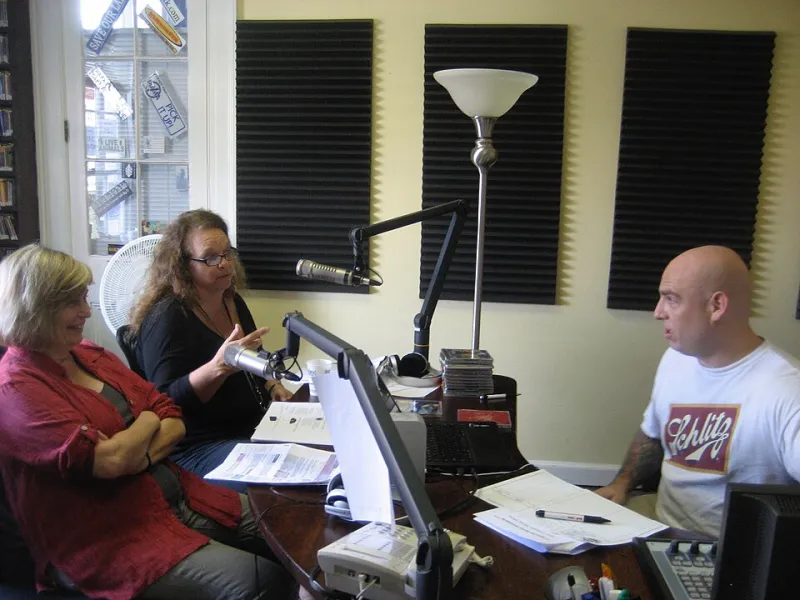
Photo: Infrogmation of New Orleans, CC BY-SA 4.0, via Wikimedia Commons
Every radio professional learns the same rule on day one: never let dead air happen. Fill the space. Keep it moving. The silence is the enemy.
And yet.
Some of the most electric moments in broadcast history have happened in the half-second before someone spoke, or the full beat after a song ended, or the deliberate, aching pause a host let hang in the air like smoke. Silence, it turns out, isn't radio's failure state. Sometimes it's the whole point.
This is a case for the pause. For the breath. For the nothing.
Why We're Afraid of Quiet
The terror of dead air isn't irrational. In the early days of broadcasting, technical glitches and off-air gaps genuinely confused listeners — they'd assume the station went down, reach for the dial, and be gone. Stations trained their talent accordingly. Talk. Fill. Move. The fear got baked into radio culture so deeply that it became reflex.
Streaming platforms have doubled down on this philosophy. Algorithmic playlists are engineered to eliminate friction entirely — no gaps between songs, no awkward transitions, no silence that might remind you to close the app. The logic is airtight from a retention standpoint. Every pause is an exit ramp.
But something gets lost in that relentless forward motion. When audio never stops, it stops meaning anything.
The Shock Jock Pause and the Intimacy Pause Are the Same Tool
Here's something that sounds counterintuitive: Howard Stern and late-night NPR hosts have more in common than either would probably admit. Both have mastered the strategic use of silence as a weapon.
For Stern at his peak, the pause was confrontational. He'd ask a guest something genuinely uncomfortable, then just... wait. No rescue. No pivot. The silence forced the other person to either fill it with something honest or squirm visibly while trying not to. Listeners leaned in. The quiet was tension made audible.
Flip to the other end of the dial — the overnight jazz shows, the late-night talk formats that aired after midnight when the audience was smaller and more vulnerable. Those hosts used silence differently. A long breath after a caller shared something painful. A moment of stillness before the next song. That pause wasn't confrontation. It was acknowledgment. It said: I heard you. That mattered. Let's sit with it.
Two completely different contexts, two completely different emotional registers — and the same tool. The deliberate nothing.
Radio's Most Remembered Moments Often Involve Stopping
Think about the broadcast moments that have genuinely lodged themselves in American cultural memory. The announcement of JFK's assassination. The Challenger coverage. The morning of September 11th, when anchors and DJs across the country went off-script entirely and simply tried to make sense of what was happening in real time.
In those moments, the usual forward momentum of broadcasting stopped. There were pauses. There were silences where no one knew what to say next. And paradoxically, those unpolished, breathless gaps made the coverage feel more real, not less. The silence was the proof that what was happening was too large for the usual patter.
Even in less dramatic circumstances, the pause carries weight. A DJ who lets a song fully finish before speaking — who doesn't talk over the outro — is making a choice that says: this music deserved to be heard completely. That choice registers with listeners even when they can't articulate why.
Streaming Doesn't Know How to Do This
Here's where traditional radio still has something that no algorithm has figured out: the curated human pause.
Spotify's auto-play and Apple Music's radio stations are genuinely impressive technological achievements. They're also emotionally flat in a way that's hard to pin down but easy to feel. There's no one on the other side making a choice to stop. There's no moment where the music ends and a human voice takes a breath before saying something that matters.
The "always on" mentality of streaming — which, yes, is basically our brand promise here at 102 Radio — is a feature. But it can also be a limitation when it becomes an ideology. Always on doesn't mean never quiet. It means always present. And presence sometimes looks like a host who stops talking long enough to let you feel something.
Some of the most compelling live radio moments happening right now are coming from broadcasters who've internalized this. Overnight hosts who sit with callers in real silence before responding. Morning personalities who let a surprising song choice speak for itself without immediately explaining it. These are small decisions that accumulate into a distinct feeling — the sense that someone is actually there, thinking, feeling, responding in real time.
Give Listeners Something to Fill
There's a psychological dimension here that audio researchers have been poking at for years. When sound stops unexpectedly, the brain doesn't go quiet — it gets louder. It starts predicting, remembering, feeling. The listener becomes an active participant instead of a passive receiver.
A well-placed silence doesn't empty a moment. It invites the listener into it.
That's a different relationship than the one streaming has perfected. Streaming is masterful at keeping you company. Radio, at its best, is capable of making you feel less alone — which is a subtly different and more profound thing.
The pause is how radio does that. The breath before the next song. The moment after a caller hangs up. The two seconds of static that somehow say everything.
Sometimes the signal is in the silence.