Nobody Saw That Coming: The Magic of Live Radio in a World That Thinks It Knows You
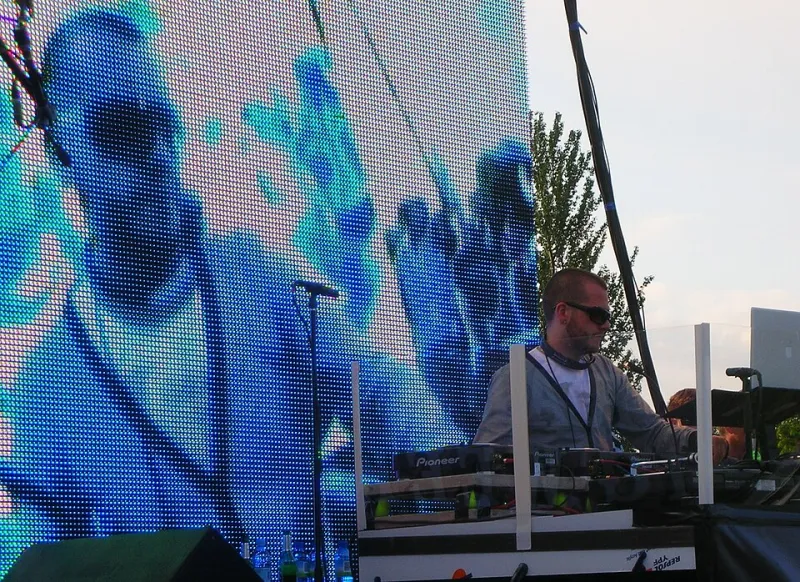
Photo: Michael Spiller, CC BY-SA 2.0, via Wikimedia Commons
Your favorite streaming platform knows your mood before your morning coffee kicks in. It knows you skip sad songs on Mondays, that you let acoustic stuff ride on Sunday afternoons, and that you have a weird but consistent soft spot for mid-2000s pop-punk. It's learned you, catalogued you, and built a listening experience so tailored it sometimes feels like looking in a mirror.
And somewhere in all that personalization, something got lost.
Live radio — messy, unpredictable, occasionally chaotic live radio — is still out here delivering moments that no recommendation engine could ever manufacture. In a media landscape obsessed with frictionless experiences, there's something almost radical about tuning into a broadcast where literally anything could happen next.
When the Script Goes Out the Window
Ask any longtime radio listener about their most memorable moments and they'll rarely mention a perfectly curated playlist. They'll tell you about the time a host broke down crying talking about a song's connection to their late father. Or the interview where a celebrity said something so unfiltered it became national news by noon. Or the moment a DJ played a deep cut nobody expected and the phones lit up like a switchboard.
Those moments aren't produced. They aren't A/B tested. They just happen, in real time, with real humans on both sides of the microphone.
Earlier this year, a morning show host in Chicago went off-script during a routine celebrity interview and ended up having a 20-minute conversation about grief that left callers openly weeping. It spread across social media not because it was polished, but because it was true. That kind of authenticity doesn't live in a playlist. It lives in the space between what's planned and what actually unfolds.
The Glitch Is the Point
Here's something the streaming world doesn't want to admit: the imperfections in live radio are features, not bugs.
When a DJ fumbles a transition, laughs at themselves, and keeps going — that's human. When breaking news interrupts a music block and a host has to pivot cold with no teleprompter — that's compelling. When a caller says something so unexpected that the host loses their composure entirely — that's radio.
Algorithms are optimized to eliminate exactly these kinds of moments. Smooth, seamless, no dead air, no awkward pauses, no surprises. And sure, that makes for a technically clean listening experience. But clean isn't always what we need. Sometimes we need to feel like we're sharing a moment with another actual human being who is also figuring it out in real time.
There's a reason radio outtakes and on-air blunders rack up millions of views online. People aren't laughing at radio — they're drawn to the realness of it.
Discovering Something You Didn't Know You Needed
One of the quieter casualties of the algorithm era is genuine musical discovery. Not the kind where a platform serves you something "similar to what you already like" — that's just a mirror with better speakers. Real discovery is stumbling onto something that reshapes your taste entirely, something you never would have searched for because you didn't know it existed.
Live radio still does this. A late-night DJ in Nashville spins an obscure 1970s soul record between two current hits, and suddenly three thousand people are Googling an artist they'd never heard of. A college radio host in Austin plays a local band's debut single at 11pm on a Tuesday, and by Thursday it's got a hundred thousand streams.
The algorithm would never have suggested either of those tracks. You didn't fit the profile. But radio didn't care about your profile — it just played the song.
That's a kind of gift that's getting harder to find.
Shared Listening in a Fragmented World
There's also something worth talking about that rarely gets enough credit: the communal nature of live radio. When you're tuned into a live broadcast, you're not the only one hearing it. Thousands — sometimes millions — of people are experiencing the exact same moment at the exact same time.
That shared experience is increasingly rare. Streaming is inherently solitary. Your feed is yours. Your recommendations belong to you. Your listening history is a private document of your personal tastes.
But when a radio host in Los Angeles plays a tribute to a recently passed legend and dedicates it to every listener who grew up with that music, everyone tuned in is in that moment together. Nobody's algorithm put them there. They all just happened to be listening, at the same time, to the same thing — and that collective experience creates a kind of emotional resonance that personalized playlists simply can't touch.
It's the difference between watching a movie alone on your laptop and seeing it in a packed theater. The content might be identical. The experience is completely different.
Why 2024 Is Actually the Perfect Year for This
Counterintuitively, the more sophisticated streaming technology becomes, the more valuable live radio's chaos feels. We've reached a point where personalization has become so precise that it's started to feel like a closed loop — you only hear what you've already proven you like, which means you only like what you already know.
Live radio is an open loop. It doesn't know your listening history. It doesn't care about your skip rate. It's just broadcasting, right now, for whoever happens to be tuned in.
In a world that's constantly trying to anticipate your next move, there's genuine relief in surrendering to something unpredictable. You can't fast-forward through live radio. You can't skip the song you don't recognize. You just have to sit with it — and sometimes, that song you almost skipped turns out to be exactly what you needed.
The Frequency That Keeps It Real
Here at 102 Radio, we've always believed that the best audio experiences aren't the most perfectly engineered ones — they're the ones that make you feel something unexpected. The interview that goes sideways in the best possible way. The midnight track that stops you mid-scroll. The host who says the thing you didn't know you needed to hear.
No algorithm built that. No recommendation engine predicted it. It happened because someone was live on the mic, fully present, and the moment just arrived.
Your streaming apps are going to keep getting smarter. They're going to keep learning you, mapping you, optimizing for you. And that's fine — there's a place for that.
But leave a little room on your dial for the stuff nobody saw coming. That's where the real magic still lives.