Why That One Radio Moment Still Lives Rent-Free in Your Head
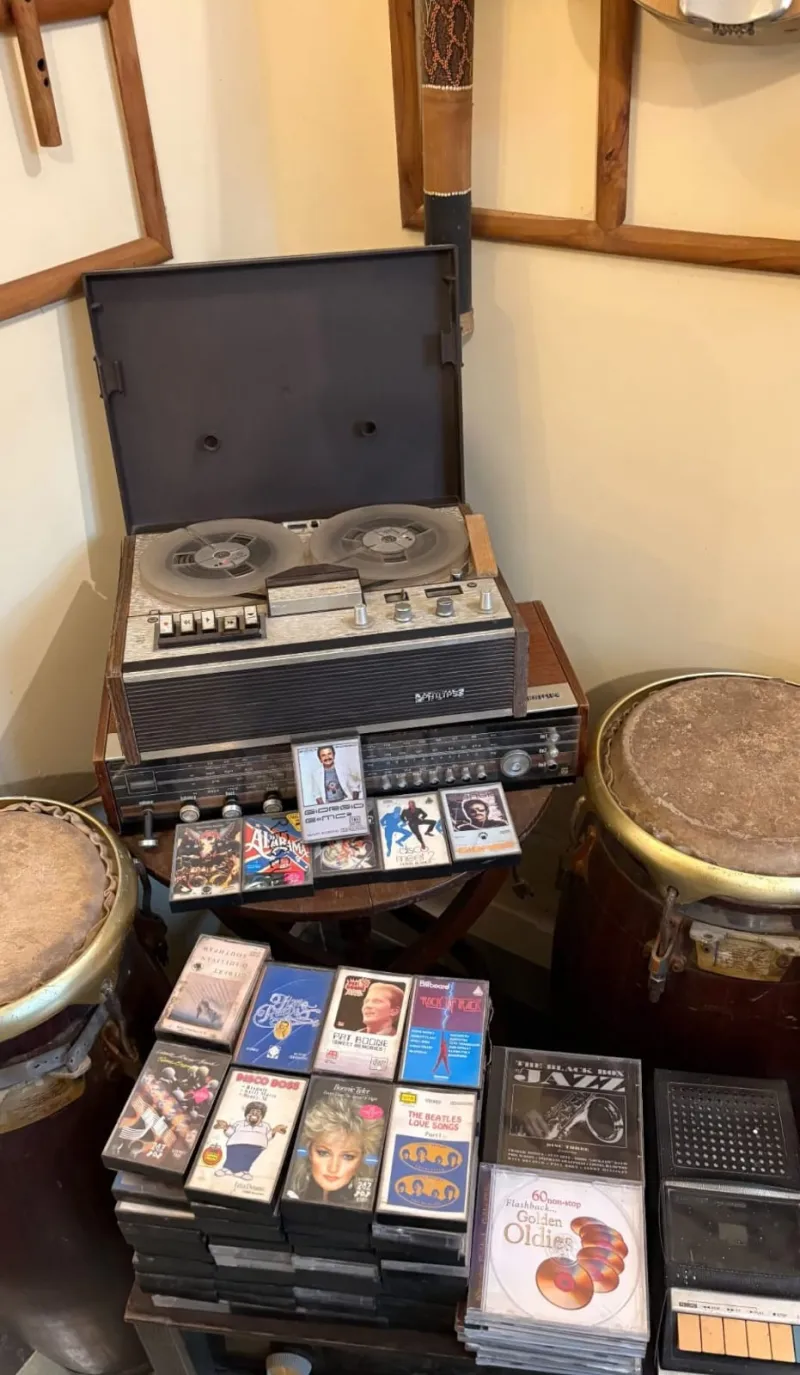
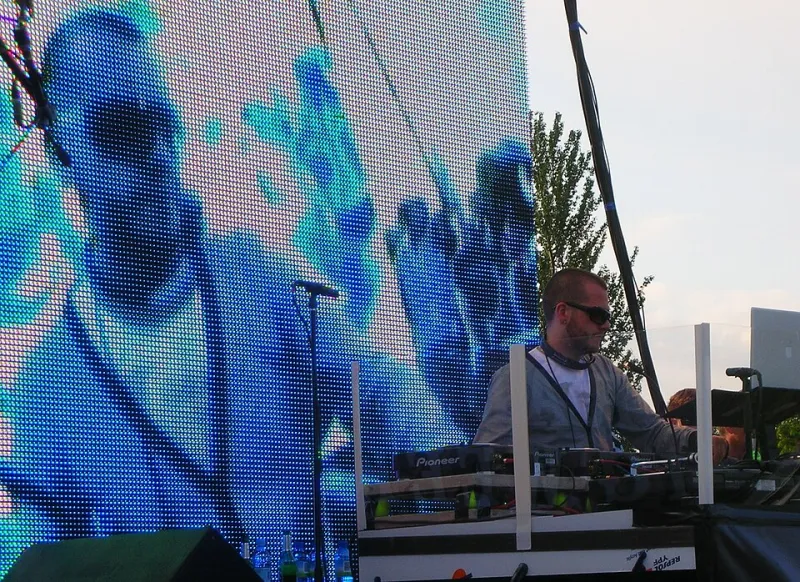
Photo: Himesh23, CC BY-SA 4.0, via Wikimedia Commons
Close your eyes for a second. Think about the first time a song genuinely wrecked you — not in a bad way, but in that chest-tight, goosebumps-on-your-arms way. Chances are, you didn't choose that song. It chose you. It came through a speaker you weren't controlling, introduced by a voice you'd grown weirdly attached to, at a time when you had no idea it was coming.
That's radio. And decades later, those moments are still sitting in your memory like they happened last week.
Streaming has given us access to virtually every song ever recorded. You can build the perfect playlist, dial in your mood, skip anything that doesn't land. It's genuinely remarkable. But ask anyone over 30 — or honestly, anyone who grew up with a radio in the house — and they'll tell you that nothing from their Spotify history hits quite like that one afternoon when the right song came on at exactly the wrong time. Or the right time. Depending on how you look at it.
So what's actually going on in our heads? Why does radio stick when streaming slides right off?
Your Brain Was Built for Surprise
Here's the short version of what neuroscience tells us: the brain pays more attention to things it didn't predict. When something unexpected happens — a song you haven't thought about in years suddenly coming through the speakers — your brain treats it as an event worth encoding. Dopamine spikes. The hippocampus gets involved. Emotional context gets layered in.
Dr. Petr Janata, a cognitive neuroscientist at UC Davis who has spent years studying music and autobiographical memory, has described music as one of the most powerful triggers for what researchers call "involuntary autobiographical memories" — those sudden, vivid flashbacks that feel less like remembering and more like briefly being there again. The emotional charge attached to those memories is part of what makes them so durable.
Streaming doesn't really give your brain the same setup. When you curate your own playlist, you already know what's coming. There's no surprise, no interruption from the outside world. The emotional stakes are lower because you're in control. Control is comfortable. Comfort doesn't always create memories.
Radio, on the other hand, operates on scarcity and randomness. You can't rewind it. You can't skip. You hear what you hear, when you hear it, and that's it. That constraint turns out to be neurologically significant.
The Scarcity Effect Nobody Talks About
There's a concept in psychology sometimes called the "scarcity heuristic" — the idea that we assign more value to things that are rare or hard to get. We see it in economics, in relationships, in food. Turns out it applies to music too.
When radio was the primary way people discovered new music, hearing your favorite song was genuinely an event. You might wait all week for it to come on. You'd call in requests and hope. If you were lucky, you'd catch it and scramble for a blank cassette. That anticipation, that effort, that fleeting nature of the experience — it all contributed to how deeply the memory got encoded.
Now you can hear any song you want in about four seconds. Which is incredible. But it also means no song ever gets that same elevated status in your memory. Nothing feels rare when everything is available.
Long-time radio listener and Chicago native Denise Morales, 47, puts it plainly: "I can listen to 'Waterfalls' by TLC any time I want on my phone. But nothing is ever going to touch the afternoon I first heard it on the radio driving home from high school. That's just locked in. The streaming version is just... a song. The radio version was a moment."
The DJ Factor
It's not just the music, either. Radio memories almost always come with a human attached.
The DJ — that voice between the songs — functions as a kind of emotional anchor. Research on memory suggests that context dramatically affects how well we encode an experience. The DJ provided context. They told you what you just heard. They cracked a joke. They dedicated a song to someone going through it. They made you feel like you were part of something bigger than just you and your headphones.
Psychologist Dr. Linda Henkel, whose work at Fairfield University has examined how context shapes memory, notes that social and emotional cues during an experience make memories more vivid and longer-lasting. Radio, almost by design, was full of those cues. Streaming, for the most part, strips them away.
There's a reason so many people describe a specific radio personality when they talk about their music memories. It wasn't just Casey Kasem counting down the hits — it was Casey Kasem's voice, that particular Saturday morning, whatever you were doing while you listened. The whole package.
When the Medium Becomes the Memory
Radio has always been more than a delivery system. It was a shared cultural experience. When a major event happened — a death, a disaster, a championship — people turned on the radio. When a new album dropped and the station did a full playthrough, the whole city was listening together. That communal dimension is baked into the memories themselves.
Streaming is personal by design. Your library, your algorithm, your recommendations. That personalization is a feature. But it also means you're almost always experiencing music alone, in a private loop calibrated specifically to you. There's no "we all heard it at the same time" moment.
And those shared moments? They're some of the stickiest memories humans make. Sports fans know this. Concert-goers know this. Radio listeners know this too, even if they've never thought about it in those terms.
What This Means for How We Listen Now
None of this is an argument against streaming. Streaming is extraordinary, and platforms like the one you're reading this on are proof that digital audio can create genuine community and connection. But it is worth thinking about what we might be losing — or at least trading away — when we hand total control over to an algorithm.
The randomness, the scarcity, the human voice, the shared moment — these aren't bugs in the old radio model. They were features. Features that turned ordinary afternoons into permanent memories.
If you want your listening life to mean something years from now, it might be worth occasionally letting go of the queue. Tune into something live. Let a DJ surprise you. Sit with a song you didn't choose.
Your brain will thank you. Probably around 2045, when a song comes on somewhere unexpected and you're suddenly, inexplicably, nineteen again.