A Free Mug and a Racing Heart: The Beautiful Madness of Calling In to Win
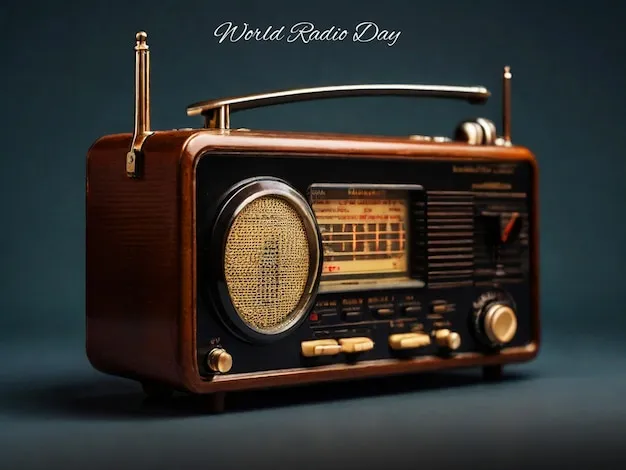
Photo: radio contest winner holding station mug in car, vintage microphone, morning radio studio, via img.freepik.com
There are worse ways to start a Tuesday than yelling at your car radio because the host just said “caller nine.” You are not caller nine. You are caller three, maybe, if the traffic light cooperates and your thumb hits the right button on the dashboard. But for the next ten seconds, none of that matters. You are in it. The prize could be a station mug, a pair of concert tickets, a gas card, or a hundred bucks in holiday cash. The stakes are small in the grand scheme of things. The feeling is not.
Radio contests are one of those beautifully stubborn traditions that refuse to die, even in 2026, when you can win a promo code by tapping a screen and never speak to another human being. Stations keep running them because listeners keep calling. And listeners keep calling because a live contest does something a digital giveaway cannot: it turns a private moment into a shared one.
The Ten-Second Theatre of “Caller Nine”
The contest is theater, and everybody knows the script. The host teases the prize. The producer counts down. The phone lines open. Somewhere, a dentist’s office receptionist is dialing on a landline. Somewhere else, a guy in a pickup truck is shouting at his Bluetooth. The host answers, and the first thing you hear is not the caller’s question about the prize. It is the sound of someone trying not to sound too excited.
That is the magic. A radio contest compresses a whole game show into a few minutes of dead air and hope. The host says “caller nine, you’re on,” and for a second the station belongs to whoever is on the other end of the line. They stammer. They laugh. They forget the name of the band they just won tickets to see. It is deeply human, and it is happening live, which means it could go sideways at any moment.
Why a Mug Beats a Promo Code
A station mug is not a rational prize. It holds coffee. It might hold pens. It probably says something like “102 Radio: Your Signal. Your Sound.” on the side. But that mug is also a trophy from a specific morning. It is proof that you were listening at the right time, that you beat the odds, that the voice on the radio said your name or your town or your goofy story about your dog.
Digital giveaways are efficient. They are also forgettable. You enter, you forget, you get an email, you delete the email. A radio contest gives you a story. You tell it at work. You tell it at Thanksgiving. You tell it to the person who did not believe you actually called in. The mug sits on your desk and does the talking for you.
Stations understand this better than anyone. That is why big-market pop stations like Z100 in New York and KIIS FM in Los Angeles still build mornings around caller-driven games, and why smaller stations lean on local prizes like a gift card to the diner down the street. The prize does not have to be expensive. It has to be specific, and it has to be won live.
The Screener Is the Unsung Hero
Behind every great contest is a screener who is having a very busy morning. They answer the line, ask the caller to hold, sort the coherent from the chaotic, and try to keep the host from putting someone on air who is either driving through a tunnel or clearly eating cereal. It is part customer service, part air-traffic control, and part comedy club door person.
The screener also protects the bit. A good contest needs momentum. It needs callers who can say something interesting in fifteen seconds. It needs the host to know whether the person on line four is going to celebrate or freeze. When it works, the contest sounds effortless. When it does not, you get dead air and a host saying “we’ll try again in a minute” while the whole audience quietly enjoys the chaos.
High Stakes, Low Tech
The strangest thing about radio contests is how low-tech they are. You need a phone, a host, a producer, and a prize. That is basically it. No app update. No account verification. No terms and conditions longer than the drive to work. The simplicity is the point. Anyone with a phone can play. Anyone with a radio can listen. The barrier to entry is a busy signal.
That is why contests still work for stations in 2026. They create appointment listening. They give the audience a reason to stay through the next song, the next commercial break, the next weather update. They turn passive listeners into participants. And they generate the kind of moments that get clipped and shared later, not because the station planned a viral hit, but because a real person lost their mind over a free mug on live radio.
The Shared Clock
Streaming gives us everything we want, whenever we want it. Radio gives us something rarer: a shared clock. The contest only happens now. The caller only wins now. If you miss it, you miss it. That faint scarcity is what makes the whole thing feel like an event, even when the event is a pair of tickets to a cover band at the county fair.
So go ahead and dial. Hit redial. Yell at the dashboard. Laugh at yourself. The prize might be small, but the moment is not. Caller nine, you’re on.