Turning Down the Algorithm: Why Local Radio Stations Are Having Their Loudest Moment in Years
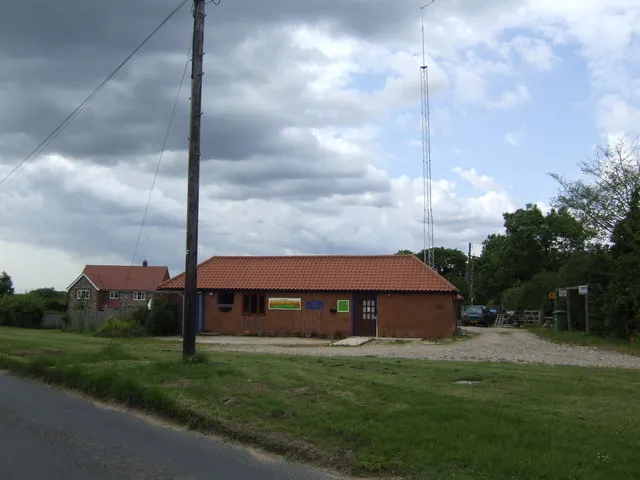
Photo: Jonathan Billinger, CC BY-SA 2.0, via Wikimedia Commons
Somewhere in Bozeman, Montana, a college student is reading the weekend weather between tracks by a local band nobody outside the county has heard of. In East Austin, a volunteer DJ is taking call-ins from listeners who've been phoning the same station for twenty years. And in a strip-mall studio in suburban Cleveland, a community broadcaster is running a Sunday morning show in Somali for a neighborhood that big media forgot existed.
None of this fits neatly into a content strategy deck. None of it was optimized for engagement. And yet, all of it is working — maybe better than it has in a decade.
Community and independent radio is making a genuine comeback in the United States, and the reasons why say a lot about what we've quietly been missing in an era of infinite, frictionless audio.
The Algorithm Problem Nobody Wants to Admit
Streaming platforms are genuinely impressive pieces of technology. The ability to surface a song you didn't know you needed, based on a thousand micro-signals from your listening history, is a real feat of engineering. But there's a catch that even the most devoted Spotify user eventually runs into: the more the algorithm learns you, the more it reflects you back at yourself.
You stop getting surprised. You stop getting challenged. Your "Discover Weekly" starts to feel less like discovery and more like confirmation. Music becomes a mirror instead of a window.
Local radio breaks that loop in the best possible way. A community DJ in Albuquerque doesn't care about your listener profile. They're going to play what they love, what's relevant to the neighborhood, and what the moment calls for — and if that means segueing from a corrido into a 90s R&B deep cut, so be it. That kind of editorial instinct doesn't live in any model.
What "Community Radio" Actually Looks Like in 2024
The term conjures images of lo-fi setups and shoestring budgets, and sure, that's still part of the picture. But the community radio landscape in the US right now is more varied and more sophisticated than it's been in a long time.
You've got LPFM stations — low-power FM licenses the FCC opened up significantly in recent years — that have allowed neighborhood organizations, churches, schools, and cultural groups to get on the air with minimal infrastructure. You've got college stations that have quietly become tastemaker institutions in their cities, from WFMU in the New York metro area to KCRW out of Santa Monica, which has long punched well above its weight in cultural influence. And you've got a growing category of hybrid operations: stations that broadcast over traditional FM frequencies and stream online, pulling in listeners from across the country who want something that feels rooted in a real place.
The business models are as varied as the formats. Some stations run on listener memberships and pledge drives — the NPR model, essentially, but applied to music and hyper-local talk. Others are supported by local business advertising, which has made a quiet comeback as small business owners realize that a community radio spot actually reaches the people walking into their store. A few are grant-funded through arts organizations or journalism foundations. Most cobble together two or three of these approaches and make it work.
The DJ as Neighborhood Institution
Here's something you'll hear from local station managers over and over: listeners don't just tune in for the music. They tune in for the person.
A community radio DJ who's been on the air in the same market for five, ten, fifteen years becomes something genuinely rare in modern media — a consistent, familiar voice that belongs to a place. They know which local team just had a rough weekend. They remember when the old record shop on Main Street closed. They play dedications for birthdays and anniversaries and sometimes just because someone called in and sounded like they needed to hear a specific song.
That kind of relationship is essentially impossible to manufacture at scale. Streaming platforms have tried, with curated playlists that mimic the feel of a radio show, complete with host voiceovers and themed programming blocks. Some of it is decent. None of it quite lands the same way, because the host doesn't actually know your city, your block, your particular slice of American life.
Listener loyalty at community stations tends to be fierce and long-lasting in a way that streaming subscriptions simply aren't. People don't cancel their "membership" to a local station the way they cancel a streaming plan when prices go up. The connection runs deeper than a transaction.
Hyper-Local Programming as a Competitive Advantage
One of the smartest things community stations are doing right now is leaning hard into the stuff that national media can't touch. Local high school sports coverage. City council meeting recaps. Interviews with the owner of the new restaurant that just opened downtown. Music from artists who are three gigs away from their first regional tour.
This is content that has exactly zero value to an algorithm trying to serve a global audience — and enormous value to someone who actually lives there.
Stations in immigrant-heavy communities are particularly well-positioned here. A station broadcasting in Vietnamese, Haitian Creole, or Amharic isn't just filling an entertainment gap. It's providing a genuine community service: news, information, cultural programming, and a sense of belonging for listeners who are often underserved by mainstream media in every direction. These stations have some of the most dedicated audiences in the entire radio ecosystem.
What This Means for the Broader Audio Landscape
The resurgence of community radio doesn't mean streaming is going anywhere. It's not a zero-sum situation, and most listeners who are passionate about local stations are also active on Spotify, Apple Music, or wherever else. The two modes of listening serve different needs.
But the trend does suggest something important: people are increasingly aware of what algorithmic audio costs them, even when they can't fully articulate it. There's a growing appetite for programming that reflects human judgment, human taste, and human presence. For audio that feels like it comes from somewhere, and someone, real.
Community radio figured that out long before it became a talking point in media circles. These stations have always been built on the idea that the signal means something because of who's sending it and who's receiving it — that broadcasting is, at its core, a relationship.
In a world where so much of what we hear has been engineered to feel personalized but actually belongs to no one and nowhere, that's a pretty compelling offer.
Tune in to something local this week. You might be surprised what you've been missing right in your own backyard.